Ambulance Services and its Benefits | Ambulance On Call
Importance of Ambulance Services and its benefits
Although ambulance services typically respond to emergencies and transport patients on behalf of the health care system, their primary mission is to offer emergency pre-hospital medical care. They make health services more accessible, especially after hours, and their advanced communications infrastructure helps with telephone triage and health services. In recent years, it has become obvious that rising healthcare system difficulties cannot be met only through more resources; innovative service delivery models are also required.
The ambulance service is well-positioned to act as a first-line provider in the health-care continuum, and it might play a key role in programmes like "treat and transfer" or "cure and go." If ambulance services could grow into more than merely pre-hospital care, they could considerably improve the health system's functionality.
A patient's transition from an ambulance to a hospital or other health facility must be seamless. Treatment plans should complement each other across health care providers. The patient should have a seamless transition in which the paramedic's care is identical to that of the receiving or referring facility.
A patient's personal, event, and treatment histories can be smoothly and efficiently transferred from one health professional to another by being a component of the care continuum. This is critical for proper patient care and can help avoid unnecessary diagnostic procedures. It enables the receiving facility to obtain a complete history of the patient's event from the patient's home or first point of contact, assuring the transfer of critical information that may appear irrelevant to the receiving facility.
Non-emergency ambulance services
Non-emergency ambulance services are needed in certain situations where the patients are not so critical but in need of accessible medical attention. The non-emergency patient transport system includes ambulances with advanced life support systems, emergency medicine, larger space, and paramedics. We must consider a number of factors when planning the service for effective use of the non-emergency patient transportation system, including the number of vehicles available, the location of the patients, the availability of appropriate medical professionals or paramedics, scheduling criteria, and finally, the demand for such ambulances in a specific area. Ambulances are used for more than just emergencies. In both emergency and non-emergency scenarios, many types of ambulances are available for medical transportation. Non-Emergency Ambulances, as the name implies, transport patients from a healthcare institution to their homes or vice versa. These ambulances can also be used for long-distance trips because there are no other options on the road and they are more convenient and comfortable.
Ambulance on call
Ambulance on Call is a non-emergency private ambulance service in Chennai that caters to all types of medical transportation needs, with a special focus on senior citizens. Ambulances are commonly misunderstood to be only for emergency medical situations. Ambulance on Call's services, on the other hand, are not limited to medical crises. In Chennai, we provide a wide range of patient transportation services. If a person is unable to travel in a conventional car, our services can be used as a form of transportation. Ambulance on call provides ac ambulance services in Chennai.
Ambulance on Call aspires to deliver innovative patient transportation in a one-of-a-kind and individualized manner, while ensuring safety and optimum comfort during medical assistance.
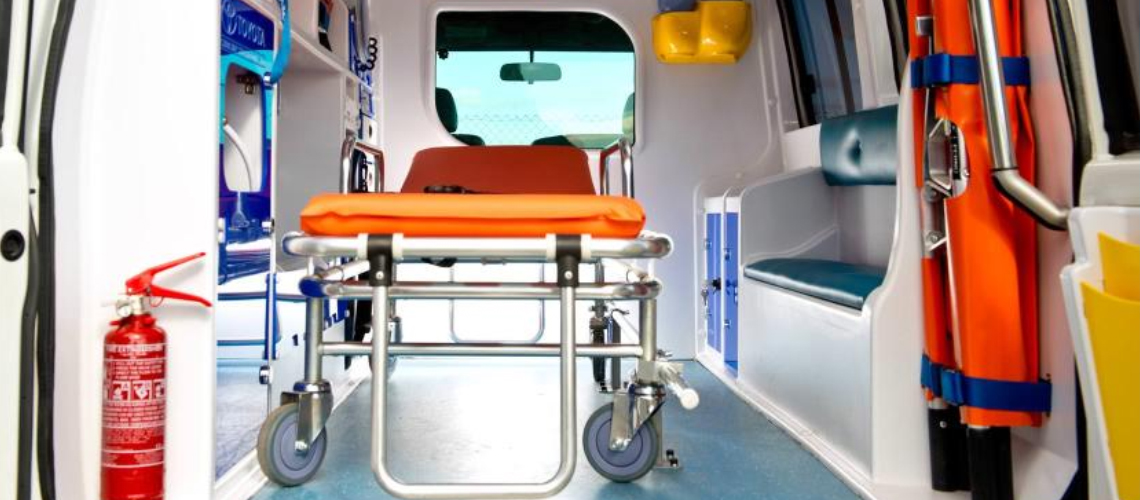
The services provided by a 24-hour ambulance service provider in Chennai are extremely cost-effective and convenient. Onboard amenities include an oxygen cylinder, an emergency medical support kit, and other medical necessities to keep the elderly safe and comfortable.